 Mary
Mary
How to Choose the Best Auto Repair Software in 2026
A clear checklist to pick auto repair software that fixes workflow headaches, reduces wait times, and makes payment collection effortless.
Most auto repair shop owners did not get into this business to spend their afternoons hunting down invoices or explaining to a customer for the third time that their car is still waiting on a part. The work itself is straightforward. The admin work is what buries people.
Great auto repair software does not reinvent your workflow. It eliminates everyday friction, connects related tasks, and gives your team the visibility to work faster without mistakes. This guide explains which features matter, what questions to ask, and how to implement a new system without interrupting your shop.
Before Orderry, our work order management was a complete mess. When a client called asking about their vehicle’s service history, it was a nightmare. We’d dig through papers for hours, sometimes coming up empty-handed. It was frustrating for them and for us.

What Auto Repair Software Means in 2026 and What It Should Replace
Many repair shops are still managing operations with whiteboards, paper job cards, and group chats. This method works until problems appear, and customers usually notice them first. Auto repair shop software replaces this fragmented approach with a unified system where every job, customer, and part is stored together and easy to access.
Instead of:
- whiteboards that change five times a day
- paper job cards that go missing or get messy
- group chats where key details get buried
- separate spreadsheets for parts and pricing
- manual follow-ups for approvals and payments
You get:
- one record per job and vehicle, with the full history in one place
- estimates customers can approve quickly, without phone tag
- work orders connected to scheduling, so handoffs don’t break the day
- parts tied to each job, so margins don’t leak quietly
- invoices that close faster with payment links
- automatic customer updates that reduce status-check calls
None of that requires someone to walk a piece of paper across the shop or send a manual reminder text. Cloud-based auto repair software makes it possible for an owner to check on progress from home and for a technician to update a job from the bay without leaving the vehicle. The shift away from manual systems is usually less painful than shops expect, and the time savings tend to show up within the first couple of weeks.
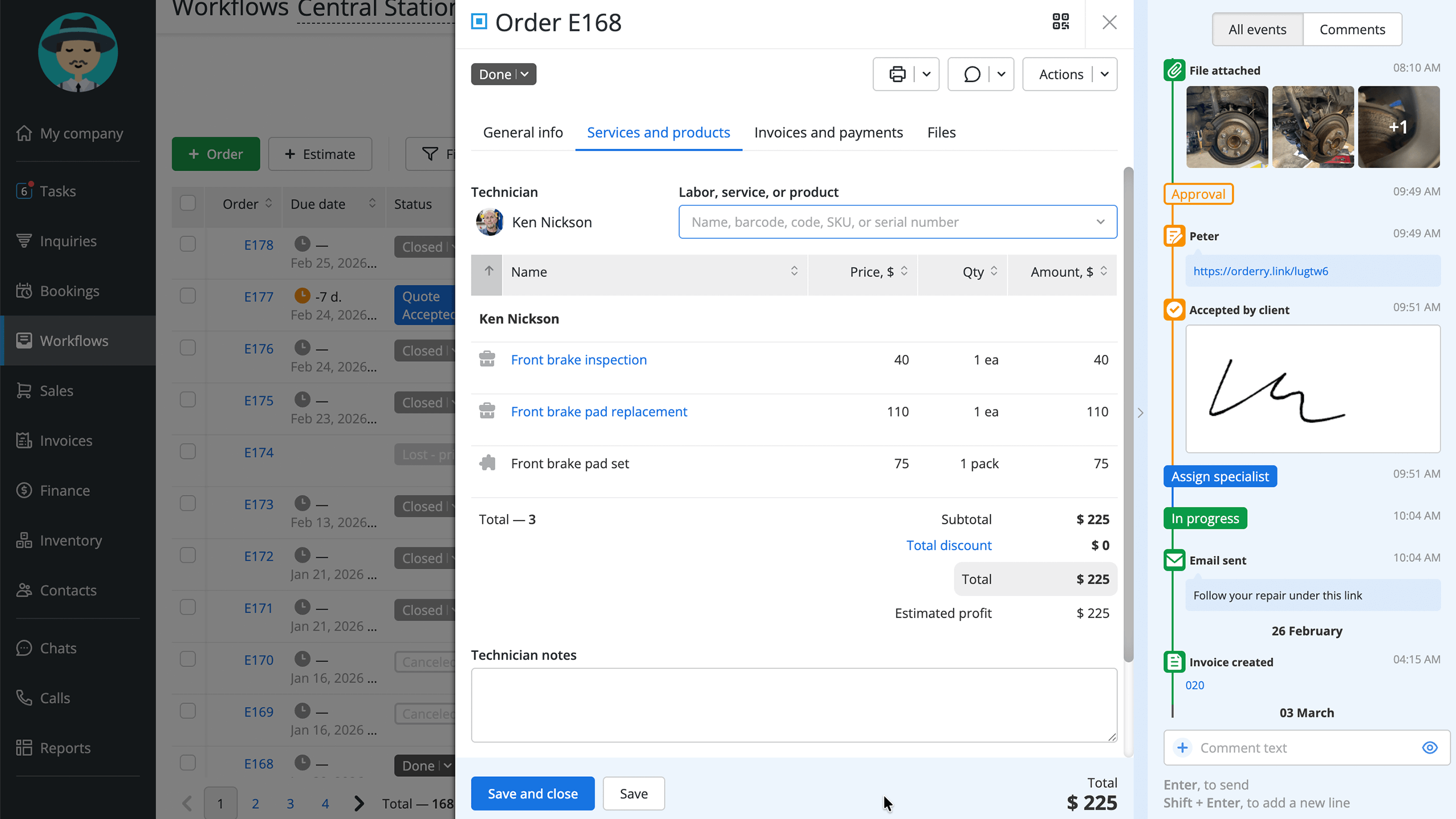 Detailed order with event feed in Orderry work order software
The Core Features Every Auto Repair Shop Needs
When evaluating repair shop management software built for automotive workflows, some capabilities are simply not optional. These are the areas where the right system earns its place every week. In practice, most small shops should prioritize six essentials first: work order tracking, approvals, payments, scheduling, parts, and customer history.
Work Orders and Job Tracking
Every job needs to move through clear stages that anyone in the shop can see without asking. Technicians need to know what they are on and what comes next. Owners need to see exactly where every vehicle stands. Without that insight, jobs drift, priorities get mixed up, and customers are left calling to find out what is happening.
Work order creation and tracking are features that have highly organized our processes.

Estimates and Customer Approvals
A proper auto repair estimate software workflow lets you build accurate quotes quickly and send them for approval before a wrench is turned. Digital sign-off eliminates phone tag and prevents disputes from customers who claim they never approved the work. Faster approvals keep bays busy instead of waiting on callbacks.
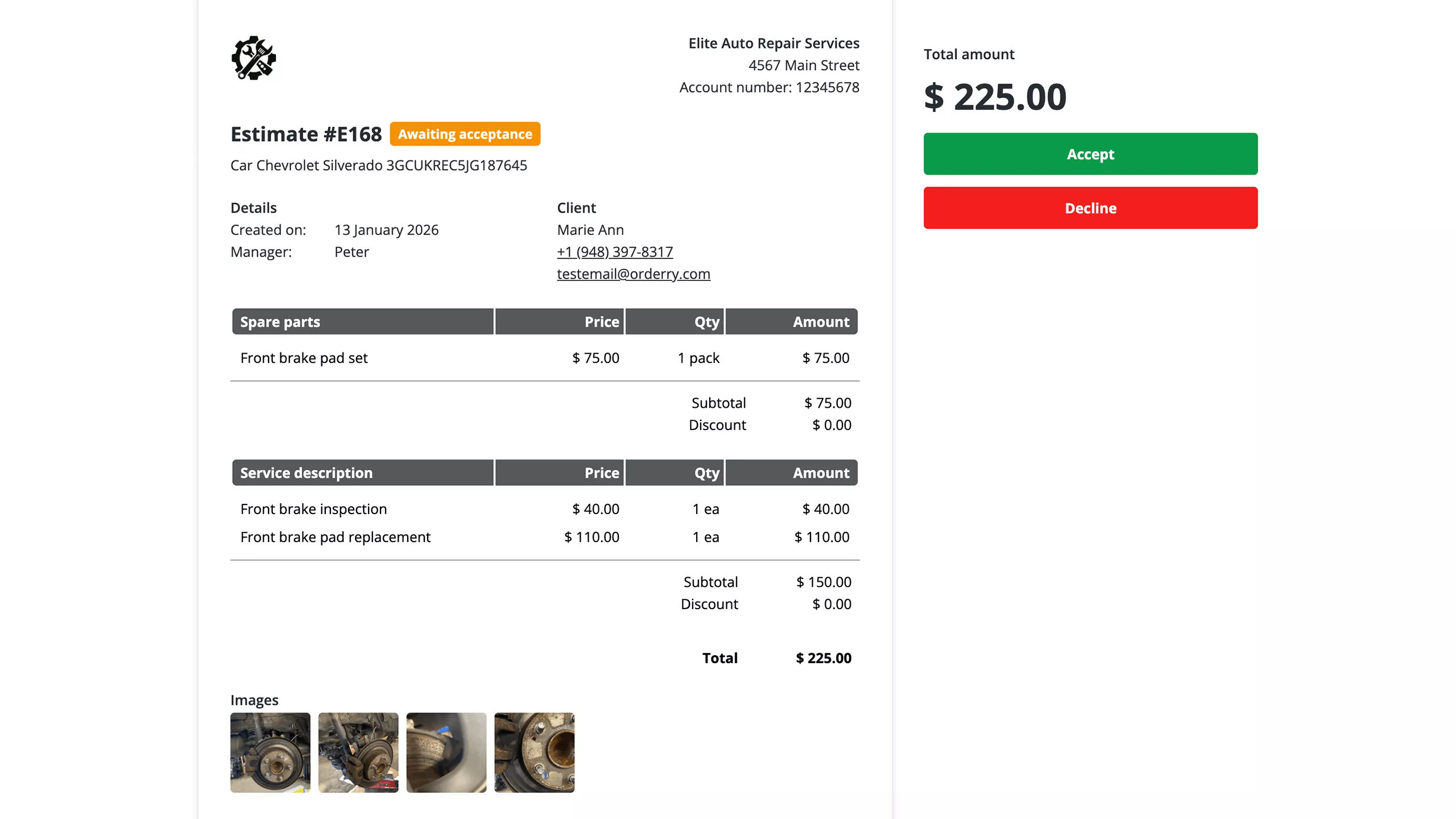 Digital estimates and online approvals in auto repair shop software Orderry
Invoicing and Online Payments
Auto repair invoicing software should produce clean, professional documents and let customers pay without returning to the shop. A payment link sent by text closes invoices faster than anything else. Overdue tracking means nothing gets forgotten on the back end, and cash flow stays predictable.
Scheduling and Job Planning
The best auto repair scheduling software gives a complete view of technician availability, bay capacity, and upcoming work. It prevents double bookings and allows you to shift jobs quickly when a repair takes longer than scheduled.
Inventory and Parts Tracking
Inventory management software ties every part to the job it was used on. You know what is in stock, what has been consumed, and what needs to be ordered before a technician is standing at an empty shelf, wondering where a component went. This kind of tracking is where margin protection actually happens.
Customer and Vehicle Records
A full service history attached to each vehicle makes return visits faster. When someone comes back after six months, the details from their last visit are already there. That kind of recall builds genuine trust without anyone having to remember anything manually.
Customer Communication Hub
Conversations tied to specific customers and vehicles stay organized and searchable. Social media crm software can turn an incoming message into a work order directly, so no inquiry disappears into a thread that nobody follows up on.
Want to see how this workflow looks in practice? Create an Orderry account and try it with a real job — from estimate to payment.
9 Questions to Ask Before You Choose
The best auto repair software reveals itself not in a demo but in how it handles real daily pressure. These questions cut past the marketing.
- Can you set up and automate key tasks within the first 30 days without outside help?
- Will it actually reduce the number of status update calls your front desk handles?
- Can you track parts used per job and see what your real margins look like?
- Does it handle online payments and flag overdue invoices automatically?
- Does it sync with accounting tools, including two-way QuickBooks integration?
- Is onboarding support practical, and does someone actually respond when you need help?
- Does it hold up on mobile for both technicians and owners throughout the day?
- Can it scale when you add bays, more staff, or a second location?
- Does it support mobile mechanic software workflows if you do on-site or roadside service?
If a vendor cannot answer these questions directly, that tells you something, too.
Automations That Matter Most for Small Shops
Automation is where auto repair management software stops being a better filing system and starts doing actual work. The difference between a tool that stores information and one that acts on it is the difference between a slow day and a productive one.
The most useful automations are simple, repeatable, and tied to real bottlenecks:
- Appointment reminders → reduce no-shows with one automated message the day before.
- Job status notifications → cut “Any updates?” calls by sending updates when a vehicle changes stages.
- Estimate approval reminders → speed up customer responses so bays stay occupied.
- Payment reminders with secure integrated payments → close invoices faster and reduce overdue balances.
- Post-service follow-ups and review requests → build reputation and repeat visits over time.
- Chat-to-order workflows → turn inbound messages into tracked work orders instead of forgotten threads.
These automations can trigger from job status changes through Orderry integrations and webhooks, so they run without anyone sending manual messages.
Intake Done Right: VIN, Booking, Chats, and Fast Approvals
Problems that start at intake tend to compound by the time a vehicle is ready for pickup. Capturing accurate details at the beginning prevents rework, reduces miscommunication, and keeps the rest of the job clean.
VIN lookup for auto repair intake speeds up data entry and eliminates the errors that come from manually keying in vehicle information. With the Orderry mobile app in hand beside the car, you capture accurate vehicle details immediately instead of relying on memory and entering them later.
A public booking page allows customers to reserve appointments anytime, helping you avoid empty slots. When booking is easy at night, customers don’t keep calling around the next morning. A unified messaging hub keeps discussions connected to the right vehicle and history, saving staff from scrolling through endless texts.
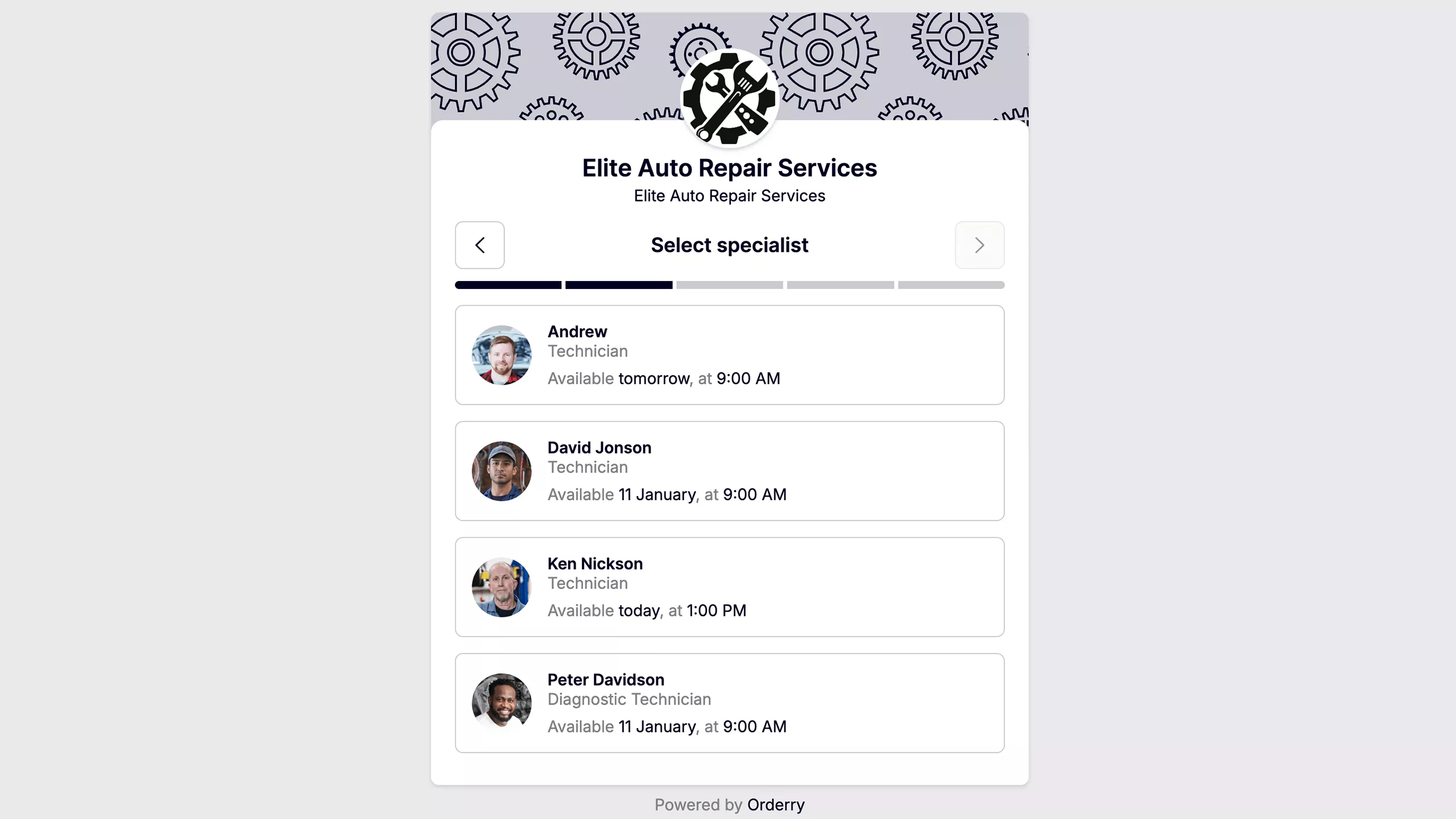 Public booking page with available slots in Orderry online booking softwware
Fast digital estimates and online approvals remove one of the slowest parts of the whole process. When a customer can review and sign off on a quote from their phone, work starts sooner, and the bay does not sit empty through the approval window.
Scheduling and Job Planning: The Fastest Way to Reduce Chaos
A basic calendar lists bookings, but it doesn’t show how the day will actually unfold. Job scheduling software designed for shop operations displays workload, priorities, and bay usage together so you can stay ahead of bottlenecks.
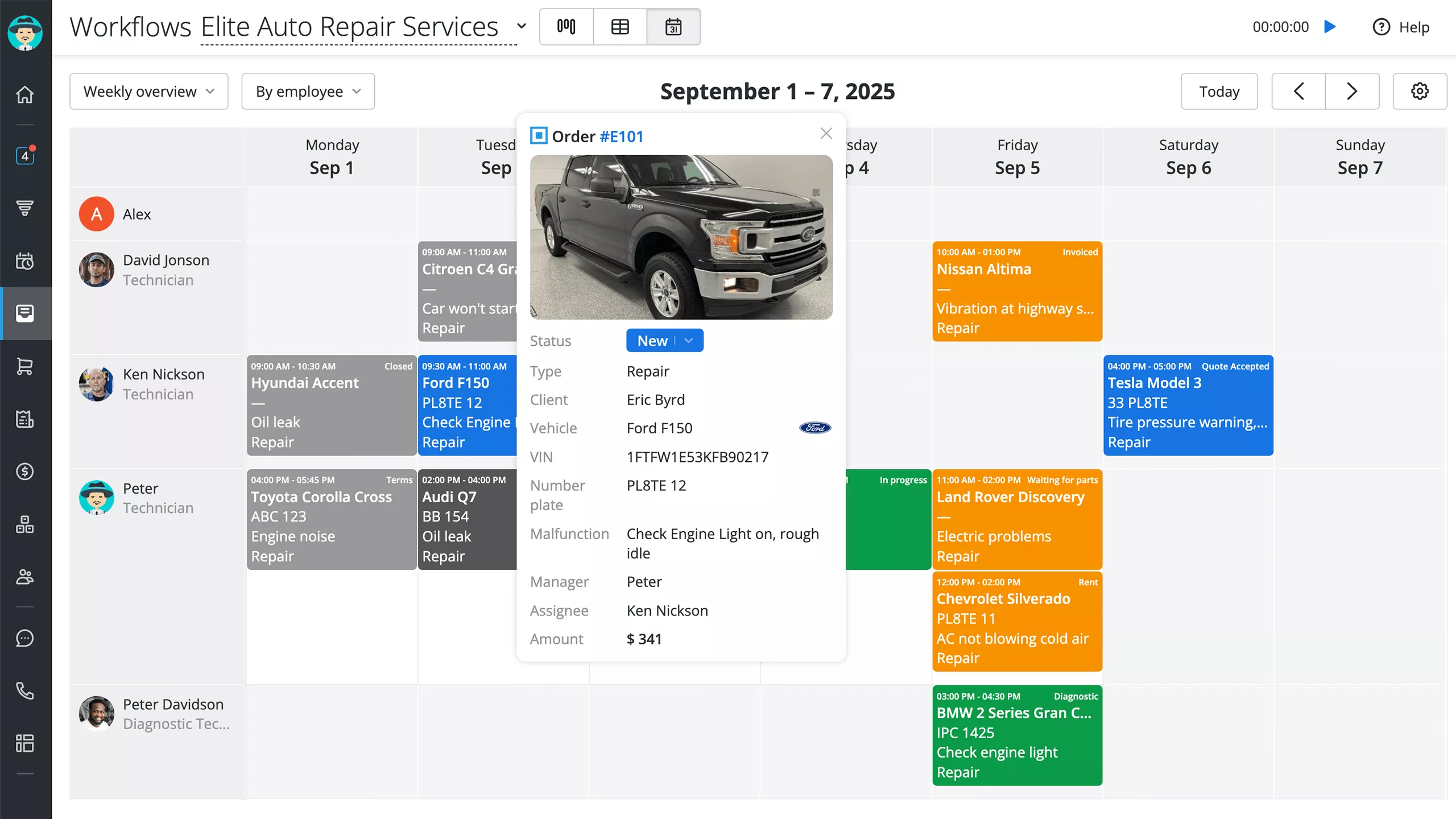 Scheduling and job planning calendar
A visual planner makes it easy to assign work, detect capacity problems before delays happen, and reshuffle tasks when jobs run long, all without paper schedules.
Scheduling pays off most when it connects to the rest of the workflow:
- Approved estimates move straight onto the schedule without manual handoffs.
- Parts availability shapes realistic timelines, so you don’t book around items that haven’t arrived.
- Status changes trigger automatic customer updates, reducing interruptions for the front desk.
- The result: fewer missed appointments, faster completion times, and fewer status-check calls.
Payments and Accounting: Stop Losing Time on Admin
Getting paid should not require a follow-up call, a second invoice, or a customer returning to the shop. Auto repair invoicing software that sends payment links by text or email lets customers settle up from wherever they are.
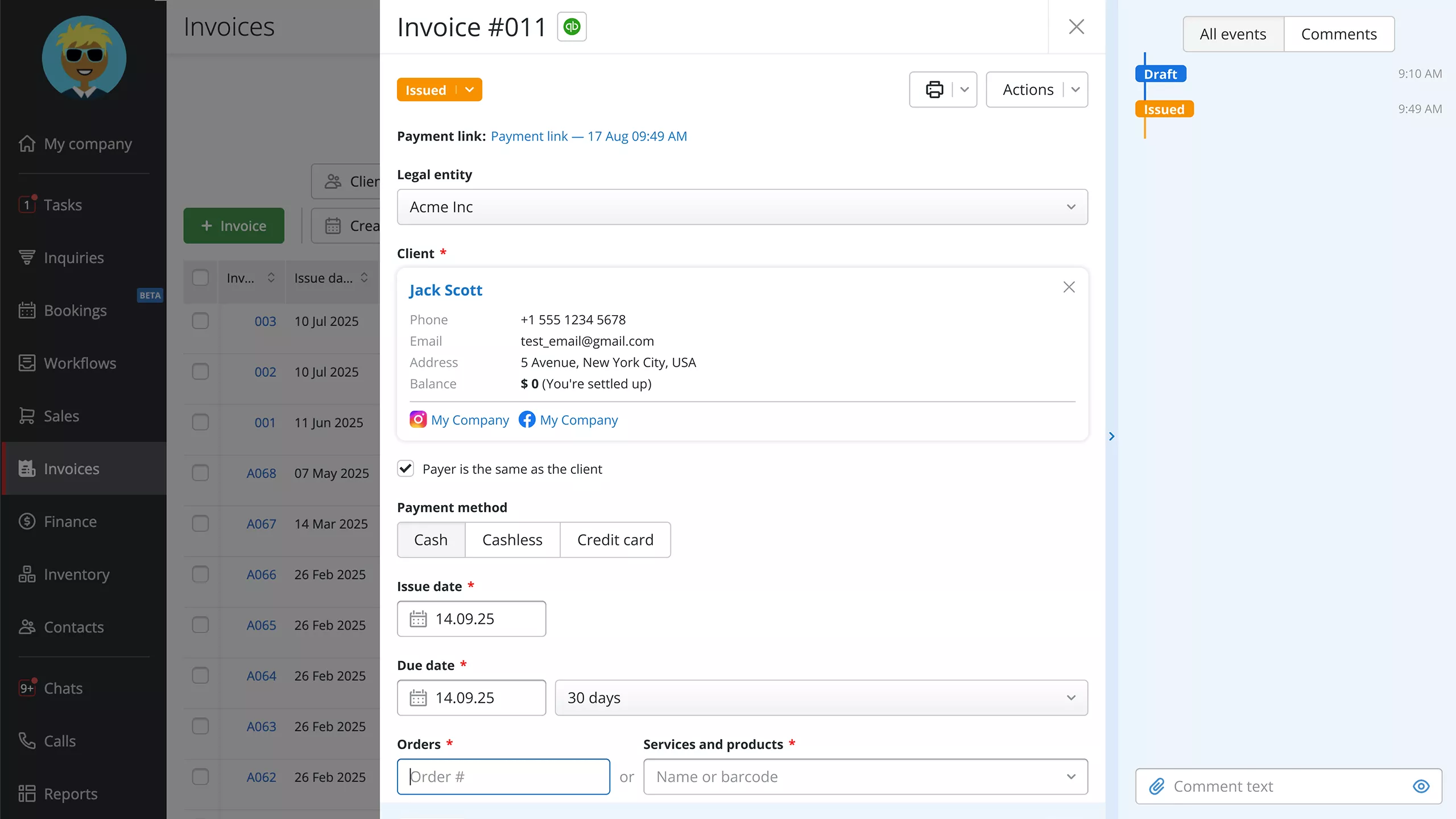 Online invoicing software paired with two-way QuickBooks
The invoice gets finalized quicker, cash hits the account sooner, and staff avoid uncomfortable discussions about last week’s unpaid balances. Online invoicing software paired with two-way QuickBooks integration keeps payments, invoices, and financial records aligned without anyone doing extra work. Once accounting sync is set up, the administrative side of running a shop mostly takes care of itself in the background.
Inventory and Parts Tracking: The Feature That Quietly Drives Profitability
Parts management does not get talked about as much as scheduling or payments, but it is one of the areas where automotive repair software to grow your business either earns its cost or does not. Solid inventory management for auto repair shops logs every part against the job it was used on.
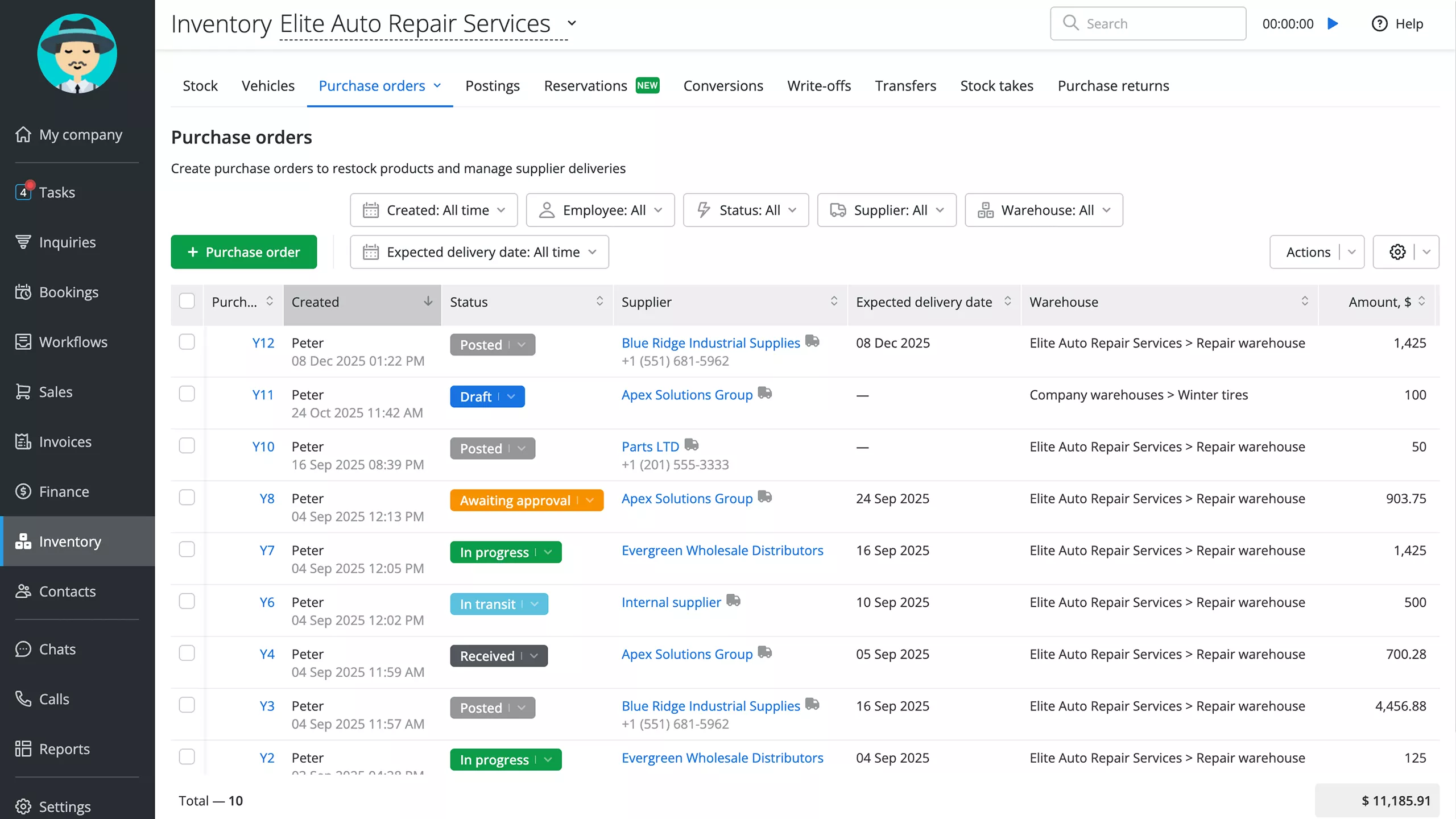 Purchase orders in Orderry auto repair software
Job costing becomes accurate. Margins stay protected. The scenario where a technician needs a part and nobody can find it, or where a reorder comes in for something that was already sitting on the shelf, happens less often.
Service and product bundles speed up common jobs. An oil change package, a seasonal tire swap, a brake inspection bundle. Estimates go out faster, pricing stays consistent regardless of who writes the quote, and customers see a professional operation rather than a shop making up numbers on the spot.
Better parts tracking also informs purchasing. When you can see what moves regularly and what sits, you stock smarter and spend less on inventory that does not earn its shelf space.
Orderry vs Competitors: How to Compare Without Wasting Weeks
The wrong way to compare platforms is to spend three weeks reading feature lists and watching demos that always show the system at its best. The right way is to focus on whether the thing will actually work in your shop under normal daily pressure. In practice, the fastest comparison is to run one real job through the core flow — estimate approval, scheduling, parts, and payment — and see which platform breaks first.
Start with onboarding speed. How long does it take before your team can use it without help? Some platforms require significant configuration before they fit an automotive workflow. Others are built specifically for shop operations and come closer to being ready out of the box.
Orderry is designed around the same end-to-end workflow most small shops run daily, so onboarding usually comes down to how quickly your team can complete one full job without workarounds. That’s the standard you should use for every vendor you compare.
When we implemented Orderry, it took our technicians three days to move along with the new software. And that's it. The training was over. They got it really quickly, and everything was running smoothly in the first week.

Workflow fit is equally important. Some platforms are built for general field service, while others align more closely with automotive workflows. If you offer roadside or on-site service, evaluating a Kickserv alternative for mobile service businesses can help determine whether dispatching and scheduling match your needs.
Look hard at how estimates, approvals, invoicing, and payments connect. When those four steps flow without friction, cash moves faster and disputes drop. Shops evaluating a Shopmonkey alternative tend to focus here because approval workflows and billing vary more than vendors usually admit in their materials.
Inventory depth deserves real scrutiny. Parts tracking and job costing are handled well by some platforms and treated as an afterthought by others. Asking for a live walkthrough rather than a feature comparison tells you more. A RepairShopr alternative for repair shops may differ significantly in how it logs parts usage and calculates job costs.
Communication tools and automation flexibility round out the comparison. The ability to trigger customer notifications based on job status, or to build a work order from an incoming chat, is not available everywhere and is worth verifying. Integrations and reporting close the loop. Accounting sync, automation triggers, and centralized job data reduce errors and surface the kind of information that helps you make better decisions about where the shop is heading.
How to Roll Out New Software in 7 to 14 Days
Switching systems feels risky when the shop is busy, so the goal isn’t “full migration on day one.” The goal is to roll out one workflow, prove value fast, and expand from there. A focused 7–14 day rollout is usually enough to see whether the software actually fits your shop.
Start with the workflow that reduces admin work and improves cash flow the quickest. Most shops begin with estimates → approvals → invoicing → payments, because the results show up immediately: fewer back-and-forth calls, faster green lights from customers, and invoices that close the same day instead of next week.
To keep the rollout smooth, focus on a small set of actions that remove friction right away:
- Pick one workflow to launch first and run every new job through it for two weeks.
- Import only the essentials so your team isn’t rebuilding records mid-day (customers, vehicles, top services, and the parts you use constantly).
- Set up a simple status flow that matches how work actually moves (New, Scheduled, In Progress, Waiting, Ready, Closed).
- Decide who owns updates so jobs don’t get stuck (front desk vs technicians).
- Create a few templates that eliminate repetitive typing (an estimate template for common services, an invoice template, and one standard customer update message).
- Turn on the automations that prevent the most common delays (appointment reminders, estimate approval nudges, status updates, and payment links/reminders).
- Train in short, role-based sessions so people learn only what they need (front desk: intake/approvals/scheduling; techs: status updates, notes/photos, parts usage).
- Standardize how jobs enter the system (booking, calls, chats — choose a consistent path so nothing gets lost or duplicated).
Track what changes over the first two weeks. You should see fewer status-check calls coming in, invoices closing faster, and fewer no-shows. These early wins build confidence and make broader adoption much easier.
FAQs
What is the best auto repair software for a small shop?
The best auto repair software matches your actual workflow rather than offering the most features. Look for something that reduces manual work, keeps communication organized, and does not take months to set up properly.
Cloud vs desktop auto repair software: which is better?
The best cloud-based auto repair software provides access from anywhere, automatic updates, and real-time collaboration between the front desk staff and technicians. For most auto repair shops, this flexibility is a bigger advantage than any desktop system can deliver.
How much does auto repair software cost?
Pricing varies by features and team size. Most shops find that time saved on admin work and faster invoice collection offset the monthly cost within the first few weeks of use.
What features help reduce no-shows?
Appointment reminders, online booking, and automated confirmations work together. For shops looking to reduce no-shows, an auto repair shop reminder system often delivers results faster than anything else.
Do I need mobile access?
Yes. Technicians updating jobs from the bay and owners checking status from outside the shop both depend on it. A system without solid mobile support creates friction that slows the whole team.
How do integrations help?
They sync accounting data, trigger automated customer updates, and eliminate duplicate data entry. Less manual work means fewer errors and more time spent on actual shop operations.
Conclusion
Shops that run well are not usually the ones with the biggest teams or the newest equipment. They are the ones where intake connects to scheduling, scheduling connects to parts, and invoicing does not require someone to chase a customer for two weeks.
The right auto repair shop management software makes that connection happen without adding complexity. When automated customer updates go out on their own, and your team is not fielding the same status calls all afternoon, the day feels different.
Choosing the right auto repair management software comes down to fit, support, and how fast your team can actually use it. Get those three things right, and the rest tends to follow.