




Response Time Reduced By 60 Times After A Year With Orderry
4 January 2024

The first few minutes at drop-off matter. A customer brings in a drill, saw, grinder, or battery tool, and your team has to turn that handoff into a job your shop can actually follow. If the intake is rushed or unclear, the repair can slow down before a tech even opens the case. Orderry’s software power tools help your team start each repair with the details that matter: who brought in the tool, what’s wrong with it, what needs to happen next, and who is responsible for the job. It works for solo techs, repair shops, contractors, and rental operators that need one clear place for jobs, tools, customers, and payments.

Create repair tickets with customer details, tool information, photos, notes, and files
Track repair status, parts used, inventory, approvals, and customer updates
Send invoices and accept payments when the power tool repair is ready to close


The moment I saw that Orderry could connect our entire operation — customer intake, full repair history, real-time order tracking, communication, inventory, and spare parts — I knew it was the best tool management software for us because it fits the way we work.

Tools do not stay in one place. A diagnostic device may be with a field tech, a customer’s item may move from intake to repair, and shop equipment may sit at another location when your team needs it now. Orderry gives you tool tracking software to keep those movements clear. As the owner, you can see what belongs to your shop, what belongs to the customer, where each item is, who is working with it, and when it should come back. Your technicians get the same record, so they do not waste time asking who had the tool last or where a repair item was sent.

Track your shop tools, equipment, rental items, and customer-owned devices in a single system
Add serial numbers, owner details, service history, and other item data to keep records easy to check
Use warehouse management to move items between shops, storage areas, technicians, repair jobs, rentals, and customer pickup
Use barcodes or serial numbers to find the right item faster when a tech needs it, or a customer calls
For small daily-use tools, the problem is even easier to miss. A scanner, tester, charger, measuring tool, or specialty hand tool can leave the bench for “just one job” and disappear for days. With small tool tracking software, your team has a simple way to check where these tools are before they slow down the next repair.
Try Orderry Free
Start your free trial today and see results this week. Full access for 7 days. No credit card required.
Repair work slows down fast when the right tool is missing. A drill is in another truck. A scanner stayed at a second location. Driver bits run out before anyone updates the spreadsheet. Orderry gives you tool management software to keep a live record of the tools your team uses every day, including power tools, diagnostic devices, chargers, meters, tool sets, and small repair supplies. You can see what you have, where it is stored, when it was moved, and what needs to be reordered before the next job gets stuck.
Keep repair tools, equipment, and small supplies organized as products
Track stock by warehouse and bin location
Use serial numbers and barcodes to find the exact tool faster
Transfer tools between shops, trucks, storage areas, and teams
Set minimum stock levels and create purchase orders before needed items run out
Inventory management software gives the team a much cleaner way to work. A technician can check what is available before taking a tool. A manager can see what moved or what came back. And when the same tools support several repair locations or field teams, tool crib management software helps prevent the usual mess: wrong counts, late reorders, duplicate purchases, and tools that disappear until someone needs them urgently.

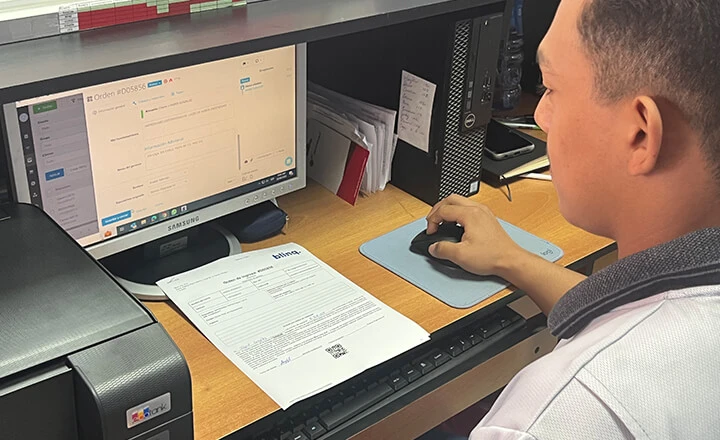
Orderry helped us reduce the turnaround time by more than 60 times. It allows us to serve, on average, 200 more devices than we did before.

A tool can be on the shelf and still be a bad choice for today’s job. Maybe the battery drill needs service. Maybe a meter has not been checked in months. Maybe the inspection certificate is saved somewhere, but no one can find it when a customer, manager, or auditor asks. In Orderry, you can keep service details tied to the tool record, add the dates your team needs to watch, and create follow-up tasks before that tool goes back into rotation.
Add tools and equipment as assets with serial numbers and custom fields
Save service dates, inspection notes, condition details, and other tool-specific data
Attach photos, files, or certificates to related work orders when service is done
Create tasks with due dates and assignees for tools that need follow-up
Track a tool's location before you send it back to a job, truck, shop, or customer
That is the real value of power tools maintenance software: it helps managers protect the schedule, keep service records close to the work, and avoid sending out tools that are not ready.
See Orderry in action
Book a personalized demo and see how Orderry helps power tools repair shops keep every job clear from drop-off to payment.
Book a Demo
The hardest part of checkout is not always taking the payment. It is making sure the bill matches the actual repair. A tech may add a worn brush, switch, charger, blade, chuck, or battery to the job later. The customer may approve one service and decline another. If those details are not recorded during the job, the front desk has to rebuild the story at pickup. Orderry helps power tool shops keep charges inside the work order as the repair changes, so the final invoice is based on the services, labor, and products already added to the job.
Add services, labor, parts, and products to the same digital work order
Create purchase orders from a work order when a needed part is missing
Sell quick products or simple services from the Sales page
Accept payments for orders and invoices through connected payment options
Send SMS or email updates when a work order status changes
That is what makes power tools repair ticketing software useful beyond the first intake form. The ticket becomes the place where the repair cost takes shape. Your team can see what was diagnosed, what was added, what was ordered, and what should appear on the invoice. For a shop owner, power tools repair tracking software means fewer last-minute price checks, fewer missed parts on the bill, and a cleaner pickup experience for the customer.

I recommend Orderry to businesses in the building industry because it allows management of both inventory and work orders in a single app, which is rare.

When a customer picks up a repaired drill, saw, grinder, or battery tool, the first question is simple: “What am I paying for?” That is where power tools invoicing software matters most. Orderry helps your team prepare the bill from the same repair record your shop used during the job.
Create digital invoices from work orders with customer, payer, services, and products already filled in
Add extra labor, parts, products, discounts, or comments before the invoice is sent
Set invoice and due dates for repairs billed now but paid later
Send invoices by email, export them as PDF, or print them for the customer
Generate invoice payment links when online payments are connected
A clean invoice also helps after the customer leaves. Paid invoices remain tied to the related job, and Orderry can track when an invoice associated with an order has been paid. If your shop uses QuickBooks or Xero, Orderry integrations can sync invoices and payments with your accounting software, reducing duplicate entry. That means fewer end-of-day billing piles, fewer “did we charge for that?” moments, and a cleaner record for every customer.
Try Orderry Free
Run repair jobs, tool rentals, payments, and customer records in one place. Start your 7-day trial with full access. No credit card required.
If your shop repairs tools and also rents them out, the rental cannot stay as “just write it down somewhere.” A rented item has a customer, a price, a return date, a payment, and a condition you may need to prove later. That is why tool rental software matters. In Orderry, you can build a separate rental flow with work orders, company assets, due dates, prepayments, responsible employees, and asset warehouses. The repair side stays organized, and the rental side does not turn into a side task that only one person understands.
Create rental work orders for the tools your shop rents
Add the client, rented asset, rental period, due date, and responsible team members
Record prepayments or deposits before the tool leaves the shop
Move rented tools between asset warehouses as their status changes
See which tools are ready for rent, out with clients, returned for check, or waiting for repair
Track overdue rentals when the return date has passed
Add rental services and accept payment when the order is closed
With tool rental business software, your shop can rent tools without building a second process outside Orderry. The counter sees what can go out today. The team sees what came back and still needs attention. The owner sees rental work as part of the same business, with records, payments, and customer history in one place.


Orderry works as service business management software for shops that need to repair, track, rent, and bill power tool jobs from one place.
Every repair starts with a clear record
When a customer brings in a tool, your team can open a work order and capture the details right away. The customer information, tool record, issue description, photos, files, and assigned team members stay in one place. The job can move through repair stages, and your team can keep the customer updated as work moves forward.
Shop tools are easier to control
Orderry also helps you manage the tools your own team uses every day. You can keep records for shop tools, check where they are, and see who or what they are assigned to. This helps when tools move between work areas, trucks, multiple locations, repair jobs, or rental orders.
One system for every way you work
Orderry works for different power tool workflows, not just one shop model. A solo tech can manage jobs, customers, payments, and tool records without a heavy setup. A repair shop can keep the front desk, technicians, parts, and invoices connected. Contractors and rental operators can track tools, due dates, customer records, payments, and daily work in the same system as the business grows.
Start with your real shop workflow
Test Orderry with the jobs, tools, parts, and payments your team handles every day. Free for 7 days with full access.

Sell tools, parts, or repair services right at the counter with the POS system for repair shops that connects to inventory and jobs.

Easily manage contacts, service history, and customer communications so you never miss a follow-up or lose track of a loyal customer.

Assign repairs, plan technician workloads, and manage timelines with the built-in job scheduling software.

Orderry helps you save time with AI that removes image backgrounds, suggests part descriptions, transcribes calls automatically, and more.

Let your team start and end shifts with a tap so you always have accurate time data for payroll and performance.

Manage suppliers, track incoming stock, and reorder parts directly within your repair shop software.
Every repair business has its own mess to manage. One shop tracks devices, another schedules home visits, and another handles bikes, engines, or motorcycles. Orderry is built for the same daily problem behind all of them: jobs need to be clear, parts need to be found, customers need answers, and payments need to close without extra chasing.
Frequently Asked Questions about Power Tools Software

Yes. Orderry can track both customer-owned items and company-owned equipment as assets. You can use asset warehouses and transfers to show where an item is now, whether it stays in the shop, moves to another location, or goes out with your team. Each asset keeps its own record, so your staff can check the item and its movement history without having to ask around.
Yes, Orderry can help you keep service, inspection, and calibration details connected to each tool. You can use asset fields for important dates and notes, attach files or photos to related work orders, and create tasks when someone needs to follow up. This gives your team a clear service trail for daily operations, but it should not be treated as legal or compliance advice.
Yes. In Orderry, repair tickets are handled through work orders. A work order can hold the customer, tool details, issue description, photos, files, services, parts, assigned team members, statuses, payments, and invoices. If you are moving from another system, Orderry also offers data import and onboarding help, so your team does not have to start from a blank account.
Orderry can work for both. A solo technician can use it to manage jobs, customers, payments, and work details from one account. If the business grows, you can add employees, locations, roles, and shared workflows, so the same system can support a larger team later.
Yes. Orderry has native integrations with QuickBooks Online and Xero, including invoice and payment sync. For other tools, Orderry also supports API, webhooks, Zapier, and Make, so you can connect it to outside workflows when needed.