
 Daryna
How to Start a Car Detailing Business
Plan your launch, understand the costs, and build a business you can manage
A detailing business can start with just one person and even without a permanent location. There are also plenty of potential customers: in 2025, the average age of a vehicle in the U.S. reached a record 12.8 years, according to S&P Global Mobility.
But for anyone starting a car detailing business, knowing how to clean and care for a car well is only part of the job. Before you start, you need to understand local demand, calculate your costs, and set prices that allow your business to make a profit. You also need to register your business properly and build a workflow.
In this guide, we will walk through, step by step, how to start a detailing business. So if you are asking, “What do I need to start a car detailing business?” we will help you turn that question into a clear list of next steps.
Ready for Your First Detailing Jobs?
See how Orderry can help you take bookings, manage each job, and get paid in one system.
No credit card required.Is Car Detailing a Good Business in 2026?
Car detailing can be profitable, but a full schedule does not always mean strong earnings. A few specific things have the biggest impact:
- Service price — whether it covers your time and costs.
- Job time — how long the job actually takes, including rework.
- Supplies and travel — chemicals, consumables, fuel, and time between customers.
- Fixed costs — rent, insurance, software, and advertising.
Here is a simple formula you can use:
Job price - supplies - labor or the cost of your time - drive time and payment costs = amount left from the job
That is still not your net profit. Rent, insurance, subscriptions, equipment, and other fixed costs still have to be covered. You make a profit only after revenue covers both variable and fixed expenses.
It can be hard to find reliable answers online to how much do car detailers make, so treat those numbers carefully. According to the U.S. Bureau of Labor Statistics (BLS), full-time workers who clean vehicles and equipment had median weekly earnings of $751 in 2025. But that is employee pay. It does not show how much someone who owns a detailing business will earn.
Estimates of profit margins for mobile car detailing business operations vary, too. Drive time, pricing, and the number of jobs completed each day can change the result, so another detailer’s margin will not tell you yours.
Use your own completed jobs instead. Compare what you charged with the time and cost of the job. Business reporting software by Orderry can help you see revenue and profit from completed work orders, and which services make you more money.
How to Start a Mobile Detailing Business and Choose the Right Setup
Where will you detail cars? How much time will you spend driving between customers? What expenses will still be there during a slow week?
The answers to these questions will help you see which setup makes the most sense for you.
Mobile Detailing Business
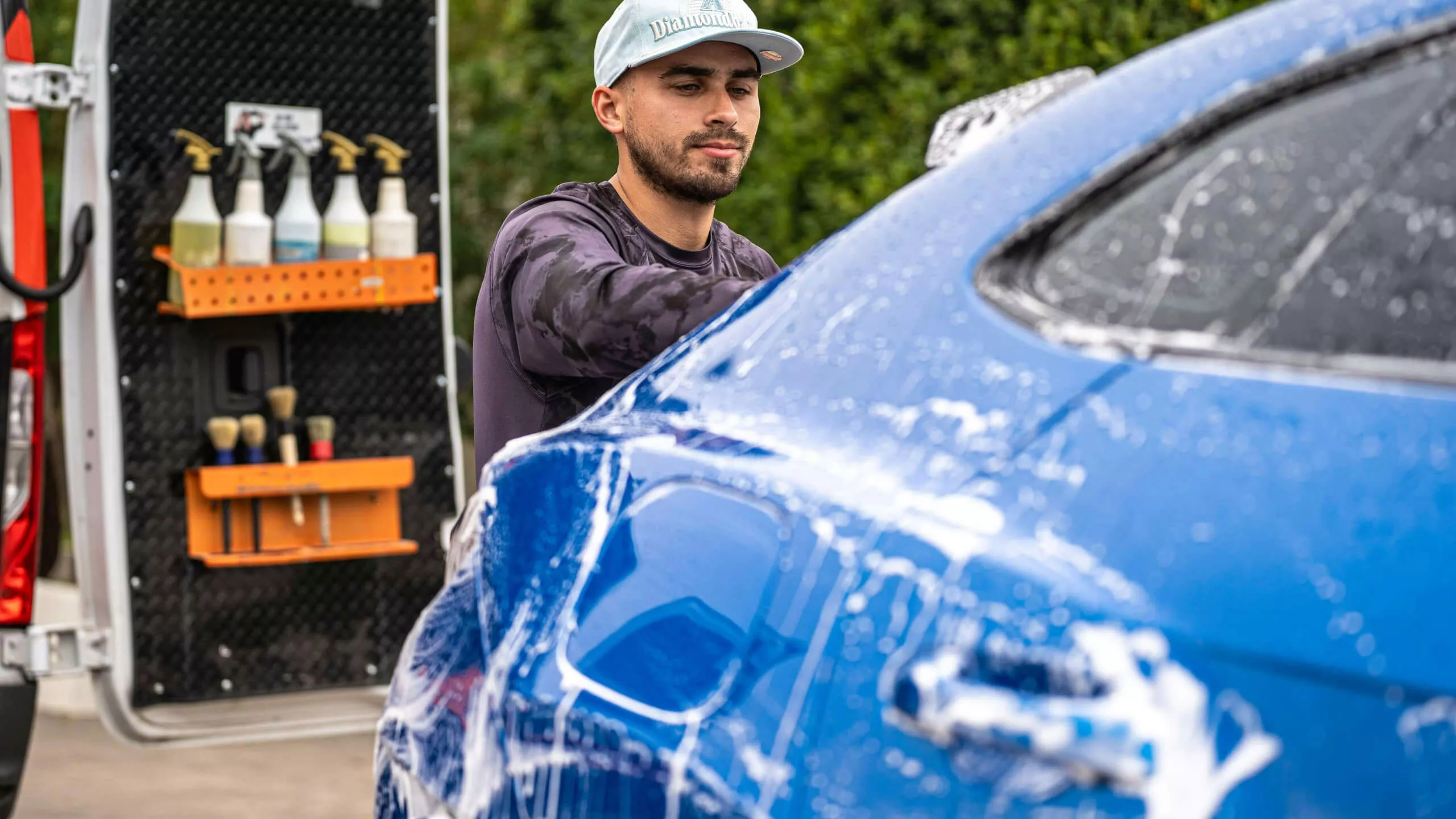
A mobile detailing business works best when your customers are fairly close to one another. Even a low-cost start can get expensive quickly if you spend half the day driving. You also need to decide where you will store your equipment and where you will get water and power for each job.
Home-Based Detailing Setup
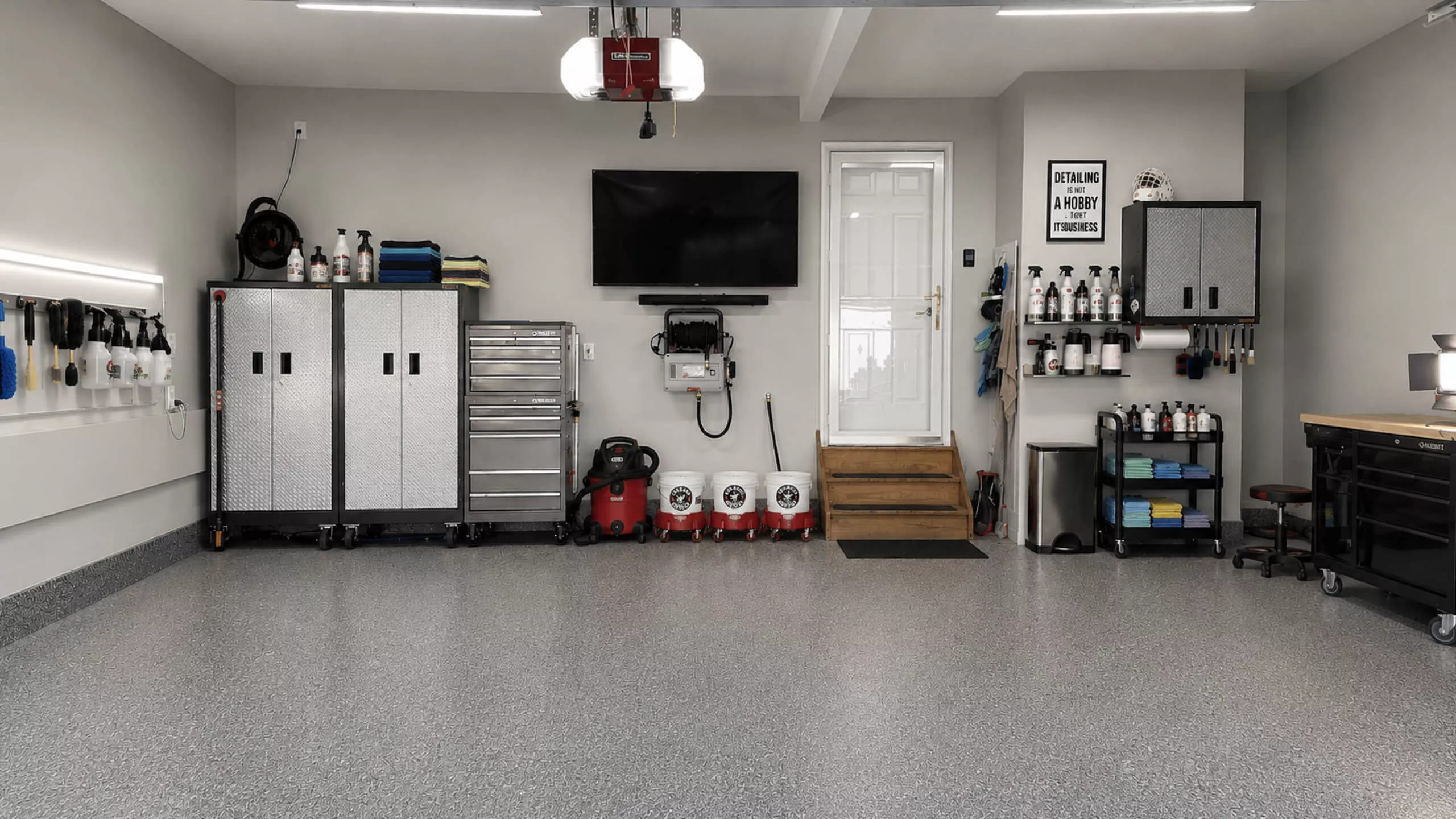
If you are researching how to start a car detailing business from home, first check whether you can serve customers at your address. Zoning rules can apply to home-based businesses, and local requirements may limit what you can do on your property. You should also think about where the wastewater goes.
Your Own Detailing Shop
A shop or detailing bay gives you a permanent place to work and removes the need to drive between customers. But you will still have to pay rent, utilities, and other fixed costs during slow weeks.
Choose the setup based on how you actually plan to work. If your customers live nearby and you want to keep fixed costs low, a mobile car detailing business can be a good place to start. If local rules allow you to work from home, that may also be enough in the beginning. A separate location makes more sense once you have enough bookings to consistently cover its monthly costs.
Build Your Car Detailing Business Plan Before You Spend Money
Before you spend money, figure out what work you can actually do, who is likely to book it, and whether it is reasonably priced.
Step 1. Make Sure You Can Do the Work Well
Practice on different cars before you charge customers. Learn how paint, trim, and interior materials react to the products you use. Get used to checking a vehicle for existing damage before you start. It is much cheaper to learn this on a practice car than on a customer’s Porsche.
Step 2. See What People Around You Are Already Paying For
Search for detailers in the area you plan to serve. Look at their service menus and prices, and then read customer reviews. Reviews are especially useful because they show what people care about and what they complain about. You may find plenty of basic wash packages nearby, but very few businesses offering paint correction, fleet work, or other services you know well.
Step 3. Put Your Idea on One Page
You can use a car detailing business plan template as a starting point, but fill it with your own numbers. Write down who you want to serve and what you will charge. Add what you expect to spend at startup and each month. Then work out how many cars you can realistically finish in a week and how much revenue that could bring in.
If you are going mobile, your mobile detailing business plan needs to account for the time between jobs. Set a service radius and estimate how much of the day will be spent driving and setting up. Your mobile car detailing business plan should make one thing clear: how many paying jobs you can actually fit into a normal day after that time is gone.

When creating a roster for guys, it’s handy to use everything in one system. That's really good. When we schedule detailing jobs, we can see in Orderry who is working, having a day off, or having a holiday, so we don't overbook cars.

Plan Your Car Detailing Business Startup Costs Before You Buy
A car detailing business startup can get expensive quickly when you spend money on capacity and services you do not need yet.
Step 4. Work Out What You Actually Need to Start
If you are wondering how much to start a car detailing business, your setup makes a huge difference. Equipment and supply packages can run from about $2,200 to more than $15,000, and that still leaves out registration, insurance, marketing, and day-to-day cash.
Build your first budget around what you will actually use:
- Basic setup: equipment, chemicals, and training.
- Mobile: vehicle storage, water, and power equipment.
- Shop: deposit, rent, utilities, and setup costs.
- Business basics: registration, insurance, website, branding, and auto detailing software.
- Working cash: money for supplies and bills during slow weeks.
- Your first setup only needs to cover the work you are ready to sell now.
Your first setup only needs to cover the work you are ready to sell now.
Handle the Legal Side Before You Take Your First Paid Jobs
Requirements depend on where you work.
Step 5. Register Your Business and Check Local Rules
You can operate as a sole proprietor or form an LLC. Before you choose, check how each option affects liability, taxes, and reporting. Business registration costs less than $300 in most cases, although the exact fee depends on your state and business structure.
Then go through the basics:
- Register your business and business name if required.
- Check whether you need a car detailing business license or local permits.
- Find out whether you need to register for sales tax.
- Get an Employer Identification Number (EIN) if you need one. The IRS issues it for free.
- Open a separate business bank account.
- Check local zoning and wastewater rules.
That last point matters for detailing. Wash water can carry soap, oil, grease, and other pollutants. In many places, you cannot simply let that water run into a storm drain, so check the rules where you actually plan to work.
Step 6. Insure the Risks You Actually Have
Car detailing business insurance should match what can happen during a real job. General liability can cover claims involving bodily injury or damage to someone else’s property. Your equipment may need separate property coverage.
For mobile detailing business insurance, also discuss the vehicle you use for work. Commercial auto has separate liability and physical damage coverage for business vehicles, so tell the agent exactly how you use yours.
When choosing insurance for mobile detailing business, explain that customer vehicles may be in your care. Ask whether garagekeepers coverage applies if one of those vehicles is damaged while you are responsible for it.
If you hire employees, check workers’ compensation before their first day. Private-employer rules are handled at the state level, so the requirements depend on where your business operates.
Ready to Move From Setup to Real Jobs?
See how Orderry helps you take a booking, manage the job, create the invoice, and record the payment in one workflow.
Book a Demo
Decide What Detailing Services You Will Sell and What to Charge
At the beginning, it is enough to offer customers a few services that you can do extremely well. Decide which services those will be and look at how much time and product they actually require. This will give you a more objective basis for car detailing pricing.
Step 7. Choose the Services You Want to Start With
Start with the services that customers book most often. For many detailers, that means interior detailing, exterior detailing, and a full detail. Charge more for jobs that take extra time and effort or require more product, such as removing a large amount of pet hair or deep-set stains.
Add paint correction, ceramic coating, and PPF later. These jobs require more experience, more time, and a more accurate estimate. Take them on once you are confident in your work and know how to price them correctly so you do not lose money on the job.
Step 8. Base Your Price on Real Costs
Your price has to cover more than the time you spend working on the vehicle. Include customer consultations, estimate preparation, chemicals, supplies, and other costs involved in completing the job. As you add more services and consumables, inventory management software can help you see what is actually used on each job and what needs to be restocked. The cost of the software itself should also be included in your overall expenses.
For mobile detailing, count your travel time separately because it directly affects profit margins for mobile car detailing business operations. For example, a $500 job that takes five hours works out to $100 per hour before expenses. But if you also spend another two hours driving, your actual hourly earnings are already lower. In that case, it makes sense to review the price.
So, to make your business profitable from the start, set a few rules:
- Inspect the vehicle before confirming the final price.
- Charge extra for especially difficult work, but make sure those conditions are clearly stated in your pricing.
- Ask for a deposit on longer jobs.
- Set your cancellation rules.
- Decide how you will handle callbacks and rework.
Think Through What Equipment Is Needed for Car Detailing
First, decide which services you will actually offer. You do not need to buy everything at once. Some equipment may sit unused for months, but the money is already spent.
Step 9. Build Your Car Detailing Equipment List
You do not need a full set of professional equipment when you are just starting. First, buy what you need to complete a basic interior and exterior detail from start to finish.
For your first jobs, this setup is usually enough:
- A pressure washer or hose, two buckets, a wash mitt, a wheel brush, and drying towels.
- A wet/dry vacuum, brushes, microfiber towels, and a crevice tool.
- Car shampoo and cleaners for wheels, interiors, glass, and tires.
- Nitrile gloves and safety glasses.
- A portable LED light, plus a phone or tablet for photos and job notes.
- Sealed containers for chemicals and separate bins for clean and used towels.
Buy more expensive, specialized equipment only when you actually need it for paid jobs. This way, you will not spend money on tools that may sit unused for months. As you add new services, you may need:
- An extractor for fabric seats, carpets, and floor mats.
- A steam cleaner for heavy dirt in seams, air vents, and other hard-to-reach areas.
- A dual-action polisher, polishing pads, compounds, polishes, and inspection lighting.
- Applicators, surface-prep products, and the coating itself.
For mobile detailing, you need to think beyond the tools you use for the job itself. Your mobile car detailing equipment should include a water tank, pump, and portable power source if the customer cannot provide water or electricity. You also need a safe place to store your equipment, as you will be carrying it from job to job.

Depending on where and how you work, your mobile car detailing equipment list may also include longer hoses, extension cords, rain protection, and equipment for collecting or redirecting wastewater. Buy only what you actually need for the way you plan to work.
Set Up a Workflow Before Bookings Start to Pile Up
When you only have a few customers, it is easy to keep everything in your head. But once you get more jobs, photos, messages, and agreements quickly end up in different places. That is why it is better to set up one simple workflow from the start using auto detailing software.
Step 10. Build One Clear Process
It can look like this:
- Inquiry → booking. The customer chooses an available time that works for them. Orderry's online booking software lets customers book through a link and shows the time slots you have made available.
- Booking → customer profile. You only need to enter the customer and vehicle details once. Customer management software stores previous bookings, completed jobs, and payments. If the customer comes back, you can immediately see their history.
- Inspection → approval. Before you start, inspect the vehicle, take photos, and record its condition. Then confirm with the customer exactly what you will do and how much it will cost.
- Approval → work order. Create a work order and keep everything related to that job in one place: services, photos, notes, files, and comments. In work order software, your team can also update the status as work progresses.
- Completion → invoice and payment. Once the job is complete, close the work order and create the invoice. If the customer pays when they pick up the car, you can accept in-person payments and record the payment in Orderry. The full job history then stays in one place.
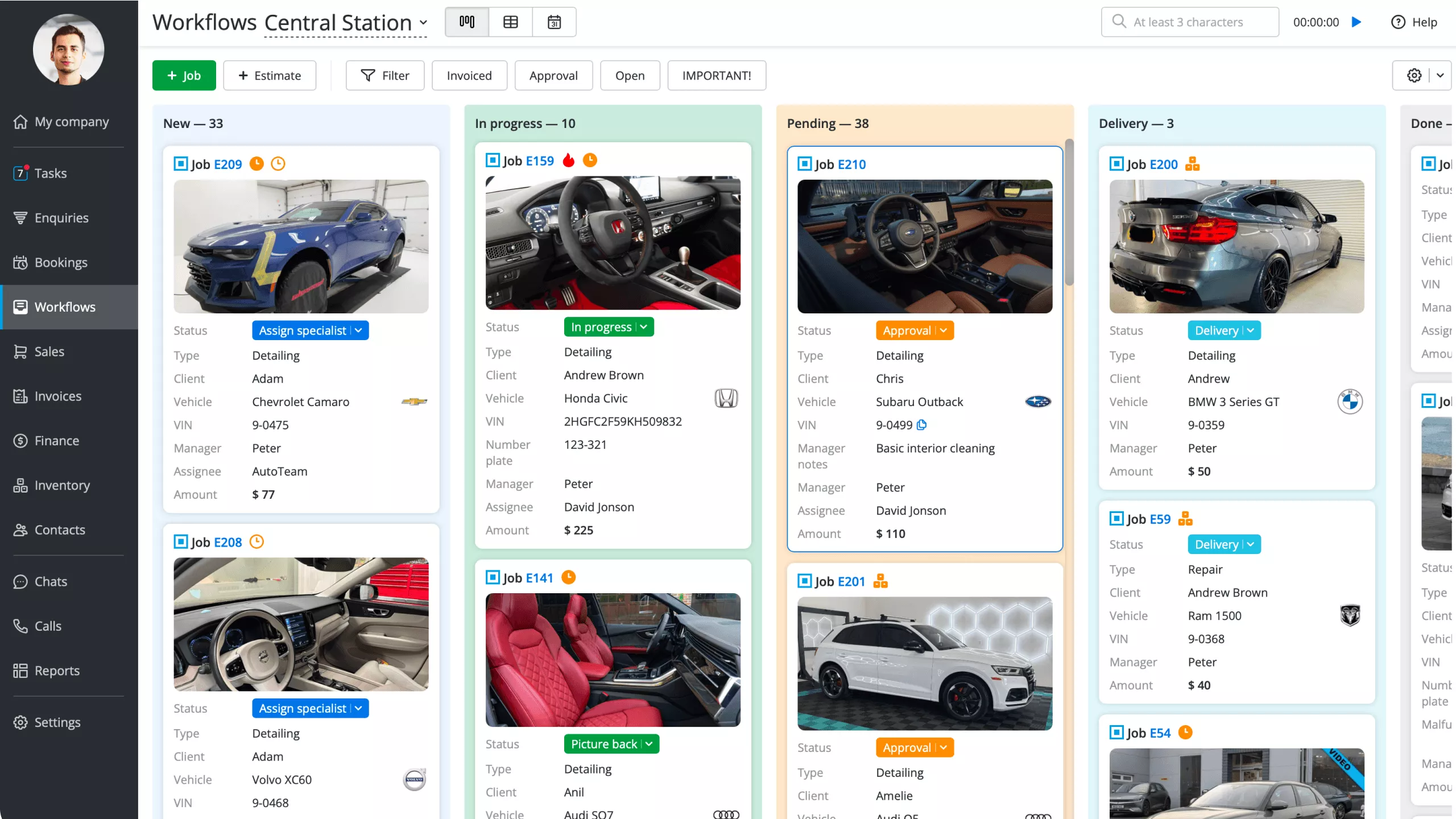 Track every detailing job from booking to completion in Orderry
Work order creation and tracking are features that have highly organized our processes.

Get Your First Customers Without Trying to Be Everywhere
At first, your car detailing business only needs to be easy to find, easy to trust, and easy to book. Focus your marketing on what attracts local customers.
Step 11. Build a Short Path From Search to Booking
Customers search for a detailer, check your work, read reviews, and decide whether they trust you with their car. So, put your first marketing efforts into these areas:
- Google Business Profile. Add your service area, hours, contact details, website, and job photos. Use Google review automation to ask customers for reviews after each job.
- Your website. Show what you detail, where you work, what each service includes, and how to book. Make it easy to use on a phone.
- Before-and-after photos. Use real customer cars with permission and take photos from similar angles.
- Local referrals. Connect with nearby body shops, dealerships, and apartment communities that can send customers your way.
- Past customers. Ask satisfied customers to book again and refer others. Repeat business is usually easier to win than a new customer.
Learning how to get into car detailing also means learning which of these channels actually brings you paid work. Ask every new customer how they found you.
A lot of advice on how to start your own car detailing business stops at “post on social media.” Go one step further. Keep the channels that bring in paying customers, improve the ones that almost work, and stop spending money on channels where people look but never book.
Is Car Detailing a Good Business to Grow? Check the Numbers First
After starting a car detailing business, give yourself time to collect real numbers before you expand. Your car detailing business setup may look busy, but that alone does not tell you whether another employee or another service will pay off.
Step 12. Track Before You Scale
Track the entire customer journey, from the first inquiry to handing back the finished vehicle. Also, calculate how much net profit each job brings in after direct costs.
When the business is still small, many mistakes are easier to spot and fix:
- Underpricing travel or job time → track the full time each appointment takes and adjust the price.
- Buying equipment too early → add it when customers regularly book the service that requires it.
- Skipping vehicle inspections → photograph and record the condition before work starts.
- Ignoring rework → count the extra hours and find out which jobs cause it.
- Hiring too early → wait until demand stays above your current capacity. Once you have technicians, employee scheduling software can help you plan their workload and see who is scheduled to work.
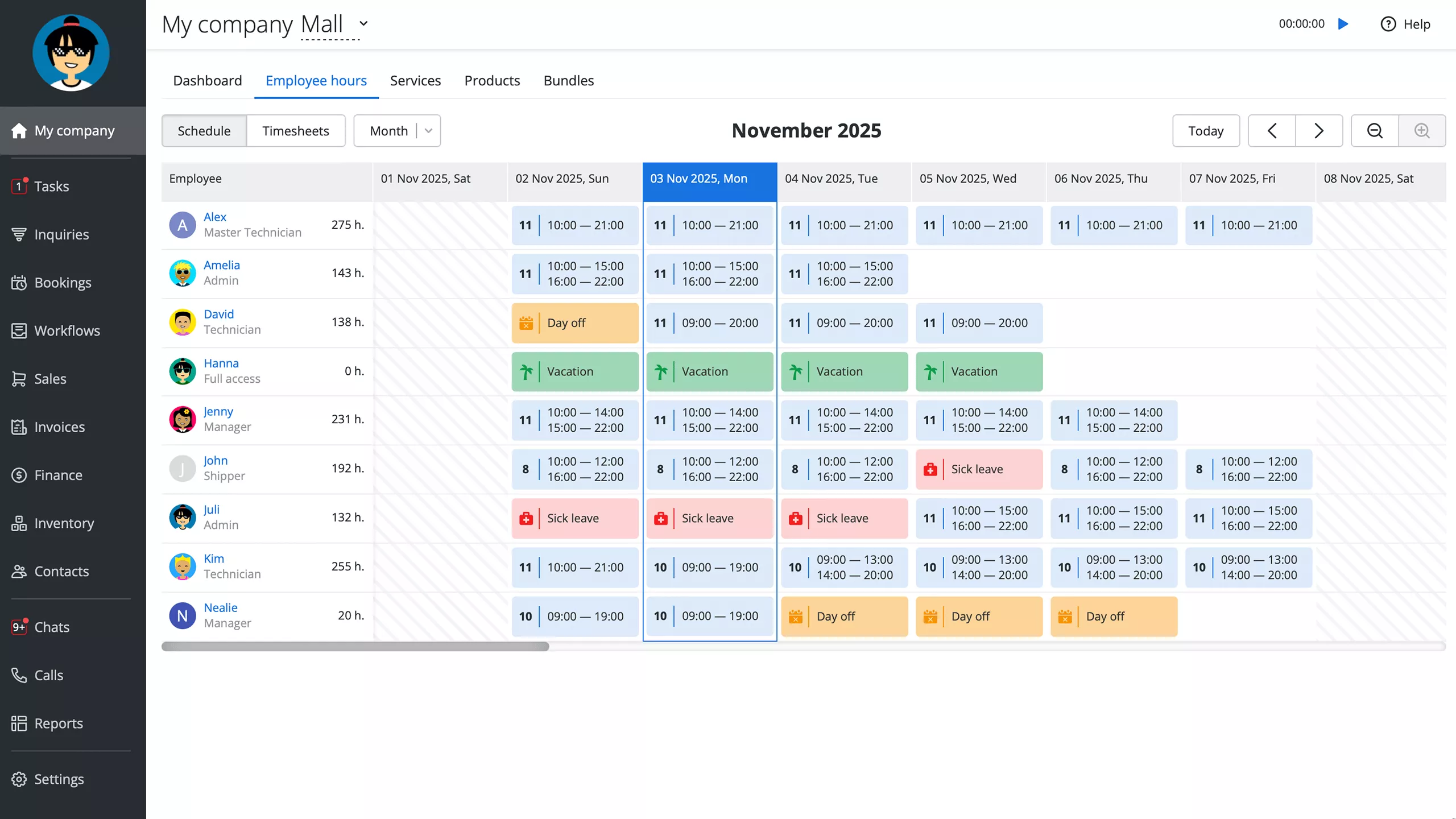 Manage employee schedules, shifts, and time off in Orderry
So, if demand stays steady and the numbers still work after real costs are counted, you have a much stronger reason to expand.
Frequently Asked Questions About How to Start a Car Detailing Business
Do you need a license to start a car detailing business?
There is no single U.S.-wide detailing license. Requirements vary by state, county, and city, so check your Secretary of State and local licensing office before opening.
What equipment do I need to start a car detailing business?
Do not buy all the equipment at once. First, decide which services you will offer. For basic washing and interior cleaning, you will need a pressure washer and a vacuum. Deep fabric cleaning requires an extractor, while paint correction requires a polisher. More expensive, specialized equipment makes sense once customers are regularly booking services that require it.
Can you start a car detailing business from home?
Yes, but check your local rules first. Registering a home-based business at your address is one thing; regularly bringing customer vehicles there is another. Your city may have zoning restrictions, limits on customer vehicles, or rules about the types of work you are allowed to perform on the property.
How much do car detailers make?
There is no single figure. Your income depends on prices, the number of jobs, and business expenses, so focus on how much money remains after all costs are paid.